Source modern white portable dining table for Hotel Bar Outdoor
Compare 30 listings for a modern white portable dining table suitable for hotels, bars, and outdoor spaces. Buyers can review specifications like material, size, and customization options to find the right fit for their venue needs.
Key considerations
Products List




Comprehensive Sourcing Guide
Strategic Sourcing Guide for Modern White Portable Dining Tables
Understanding Product Definitions and Core Attributes
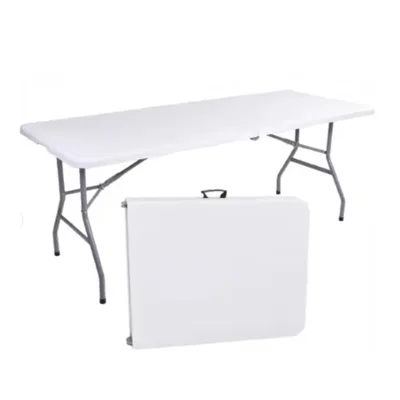
When initiating a procurement strategy for a modern white portable dining table, buyers must first establish a precise definition of the target product based on observable market data. The term "modern" in this context often refers to a design aesthetic that blends contemporary lines with functional utility, though market listings also indicate a strong presence of European-style designs. The color specification is a critical differentiator; the "white" attribute is a primary visual requirement, yet suppliers frequently offer variations including black and brown finishes. The "portable" designation implies a specific mechanical configuration. While some market entries describe tables as "unfolded" for immediate use, others explicitly list "folded" as a key attribute, indicating that the portability feature relies on a folding mechanism that allows for compact storage and transport.
The material composition is equally variable and requires careful verification. While the core keyword suggests a specific look, the actual supply base includes tables constructed from metal, stone, wood, and wooden composites. This divergence means that a buyer seeking a "modern white" table must clarify whether the structural integrity is derived from metal framing, wooden legs, or stone tops. The "modern" style often pairs with metal or wood, whereas stone tops might lean toward a more traditional or heavy-duty application. Furthermore, the "portable" aspect is often linked to the folding capability, which directly impacts the volume and packing efficiency. Buyers should note that some models are designed as fixed units, while others are explicitly categorized as folding, which dictates the logistics and handling requirements during shipping and installation.
Technical Specifications and Dimensional Standards
Technical specifications for portable dining tables vary significantly across the supply chain, and buyers must rely on verified data points rather than general assumptions. Standard dimensions observed in the market range from 13080cm to 16090cm, with some models accommodating capacities for 140-200cm in length. The model numbers associated with these specifications, such as DT-3367, DT-3368, and DT-3115, serve as unique identifiers for specific configurations. For instance, the DT-3367 model is associated with a size of 14080cm, while the DT-3368 corresponds to a larger 16090cm footprint. These dimensions are critical for space planning in dining rooms, hotels, and outdoor venues.
The packing standards are another vital technical consideration. The market data indicates that packing methods vary from standard carton packing to more robust solutions involving wooden frames or wooden pallets. Specific packing configurations include "1 table/ctn" for certain models, while others utilize "1PCS/2ctns" or "1PCS/3ctns" to accommodate the folded or unfolded state. The volume of a single unit can be as high as 0.47cbm, which directly influences freight costs and container utilization. For example, a 40HQ container can hold approximately 122 sets of certain table models, a figure that serves as a benchmark for logistics planning. Buyers must verify the exact packing standard for their chosen model, as the difference between a standard carton and a wooden frame can affect the table's protection during transit and the overall shipping cost.
Compliance, Certification, and Material Verification
Navigating the compliance landscape for dining tables requires a clear distinction between observed certifications and unverified claims. The supply base includes references to certifications such as ISO, though the specific status of these certifications for every listed product is not uniformly confirmed. Some listings mention "ISOCustomized," suggesting that certification processes may be tailored to the order, but buyers should not assume universal compliance without direct verification. Additionally, while CE certification is noted in background data, it should be treated as a potential attribute rather than a guaranteed standard for all modern white portable tables.
Material verification is paramount, especially given the diversity of construction types. The market offers tables made from metal, stone, and wood. For a "modern white" table, the finish application is crucial. White finishes on metal, wood, or stone require different manufacturing processes and durability profiles. Buyers must request material test reports to confirm the quality of the finish, particularly for outdoor usage where exposure to elements is a factor. The warranty periods observed in the market range from 1 to 3 years, which serves as an indicator of the manufacturer's confidence in their material quality. However, this warranty should be explicitly tied to the specific material and finish chosen, as a wooden table may have different wear characteristics compared to a metal or stone alternative.
Cost Drivers and Pricing Dynamics
The pricing structure for modern white portable dining tables is influenced by several key factors, including material composition, customization levels, and packaging requirements. The observed price range in the market spans from $12.71 to $1,500, a wide spectrum that reflects the diversity of product types from basic metal frames to high-end stone or custom-designed units. The lower end of the price range likely corresponds to standard metal or wooden models with minimal customization, while the higher end may involve stone tops, complex folding mechanisms, or bespoke finishes.
Customization is a significant cost driver. The market data confirms that customization is available, and many products are listed as "Customized." This can include specific dimensions, color variations beyond the standard white, and tailored packing solutions. The Minimum Order Quantity (MOQ) also plays a role in the unit cost, with observed MOQs ranging from 1 to 500 sets. A lower MOQ of 30 sets is common for certain models, but buyers ordering smaller quantities may face higher per-unit costs. Additionally, the packing method affects the final price; options like "Standard Export Carton+Wooden Frame" or "Wooden Pallet" add to the manufacturing and shipping expenses. Buyers should request detailed quotes that break down the costs associated with material, customization, and packaging to understand the true cost drivers.
Typical Applications and Usage Scenarios
The versatility of modern white portable dining tables makes them suitable for a wide array of applications. The market data highlights usage in diverse settings including hotels, dining rooms, bars, and outdoor venues. Specific models are also designed for high-traffic public spaces such as stations, airports, parks, hospitals, supermarkets, and cinemas. This broad applicability suggests that the design must balance aesthetic appeal with durability and ease of maintenance.
For hotel and dining room applications, the "modern" and "European" styles are particularly relevant, offering a sophisticated look that complements upscale interiors. In outdoor settings, the material choice becomes critical; metal or treated wood may be preferred for their resistance to weathering. The "folded" attribute is especially valuable in these scenarios, allowing for easy storage when the tables are not in use. For public venues like airports and hospitals, the "fixed" or "rotary" nature of the table legs and the overall stability are key considerations. The "white" color is often chosen for its ability to brighten spaces and maintain a clean, hygienic appearance, which is essential in healthcare and food service environments.
Supplier Evaluation and Quality Control Protocols
Evaluating suppliers for modern white portable dining tables requires a rigorous approach to quality control and verification. Buyers should prioritize suppliers who can provide clear documentation regarding their production standards and origin. The supply base includes manufacturers from Zhejiang Province and Dongguan, China, which are known manufacturing hubs. However, the specific origin of each product must be confirmed, as this can impact shipping logistics and tariff implications.
Quality control should focus on the consistency of the white finish, the stability of the folding mechanism, and the structural integrity of the materials. Buyers should request samples to verify the "new" condition of the products and to test the durability of the finish under various conditions. The warranty period of 1-3 years is a useful metric, but it should be backed by a clear service agreement. Additionally, the packing standard must be verified to ensure that the tables arrive in perfect condition. The "Carton Packing" or "Wooden Frame" options should be assessed for their ability to protect the product during transit. Buyers should also check for any specific certifications or standards that the supplier claims to meet, ensuring that these are valid and applicable to the specific product model.
Long-Term Procurement and Logistics Considerations
Long-term procurement of modern white portable dining tables involves strategic planning for inventory, logistics, and maintenance. The observed lead times and container capacities, such as the 122 sets per 40HQ container, are essential for supply chain planning. Buyers must consider the volume of the product, which can be up to 0.47cbm per unit, to optimize shipping costs and minimize freight expenses. The "folded" state of the tables is a significant advantage for logistics, as it reduces the overall volume and allows for more efficient container loading.
Sustainability and maintenance are also long-term considerations. The choice of material, whether metal, wood, or stone, will influence the environmental impact and the ease of cleaning and maintenance. For outdoor applications, the durability of the white finish against UV exposure and moisture is critical. Buyers should establish a maintenance schedule that aligns with the manufacturer's recommendations and the specific usage environment. Additionally, the availability of replacement parts, such as folding mechanisms or legs, should be confirmed to ensure the longevity of the investment. By focusing on these long-term factors, buyers can secure a reliable supply of modern white portable dining tables that meet their operational needs and aesthetic requirements.
FAQs
What customization options are available for these tables?
Customization is available for these tables, allowing buyers to specify unique dimensions or finishes. The product listings confirm that many models are offered as customized units, enabling tailored solutions for specific project needs.
Which materials are used to construct these dining tables?
These tables are constructed from various materials including metal, stone, and wood. Buyers must verify the specific material for each model, as the supply base offers diverse construction types ranging from metal frames to wooden composites.
How are these tables packed for international shipping?
Packing methods vary from standard carton packing to solutions involving wooden frames or pallets. Specific configurations include one table per carton or multiple cartons per unit, depending on whether the table is folded or unfolded for transport.
Can I find tables with a specific warranty period?
Yes, warranty periods observed in the market range from one to three years. This warranty serves as an indicator of manufacturer confidence, though it should be explicitly tied to the specific material and finish chosen for the order.
What is the minimum order quantity for these products?
The minimum order quantity ranges from one to five hundred sets depending on the supplier. A common MOQ observed for certain models is thirty sets, though smaller quantities may incur higher per-unit costs.
Which locations are the primary manufacturing origins?
Primary manufacturing origins include Zhejiang Province and Dongguan in China. Buyers should confirm the specific origin of each product as this impacts shipping logistics and potential tariff implications for the final delivery.